søren peter mørch
xuu (txt.sour.is)
In reply to: #3syipzq
2 years ago
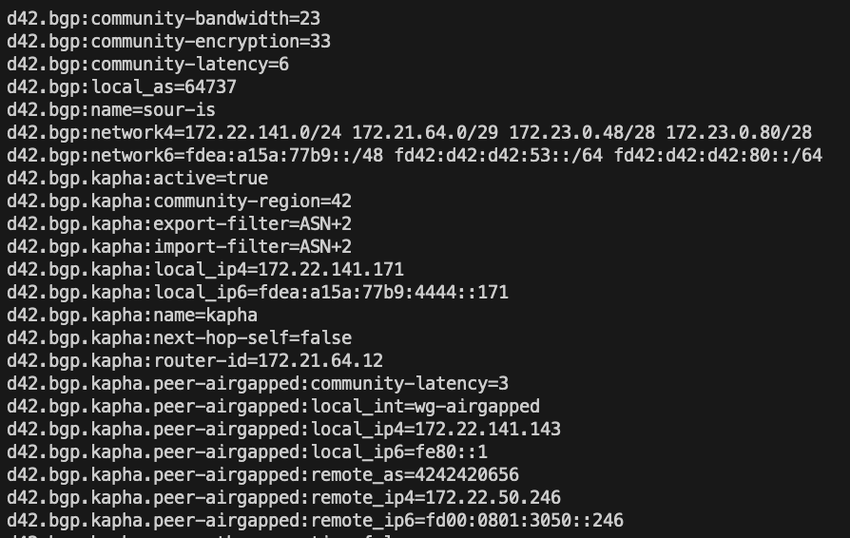
@lyse its a hierarchy key value format. I designed it for the network peering tools i use.. I can grant access to different parts of the tree to other users.. kinda like directory permissions. a basic example of the format is:
@namespace
# multi
# line
# comment
root :value

# example space comment
@namespace.name space-tag

# attribute comments
attribute attr-tag  :value for attribute

# attribute with multiple
# lines of values
foo :bar
      :bin
      :baz

repeated :value1
repeated :value2
each @ starts the definition of a namespace kinda like [name] in ini format. It can have comments that show up before. then each attribute is key :value and can have their own # comment lines.
Values can be multi line.. and also repeated..
the namespaces and values can also have little meta data tags added to them.
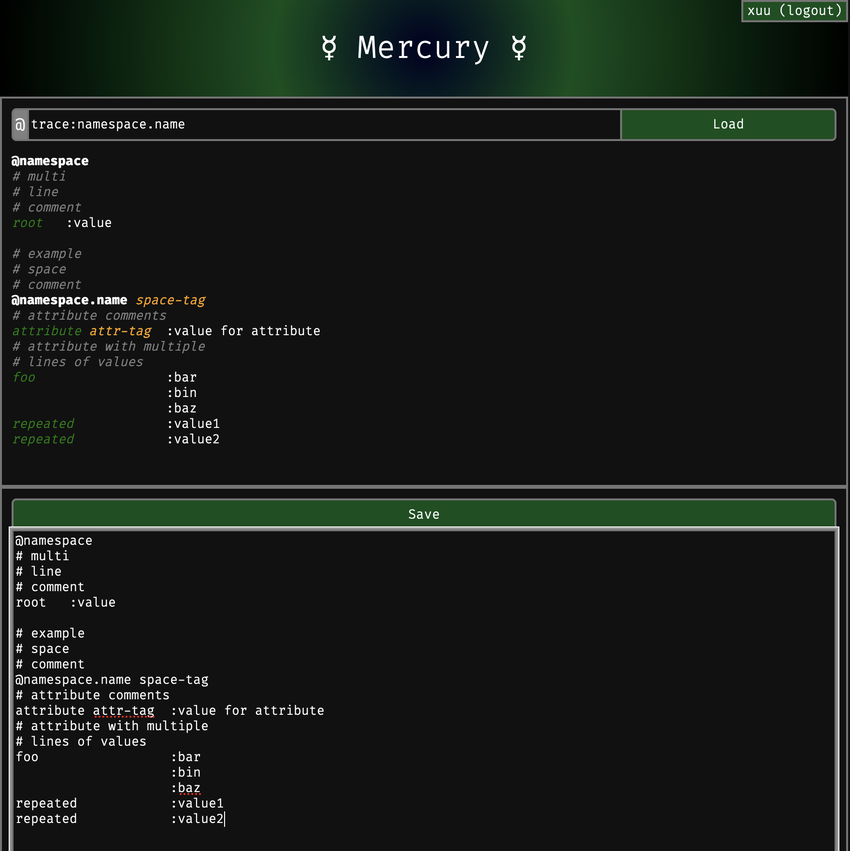
the service can define webhooks/mqtt topics to be notified when the configs are updated. That way it can deploy the changes out when they are updated.